Sustainability Training and Workshops Near East University provides sustainability-related training and awareness activities for both staff and students on a regular basis as part of its institutional commitment to environmental sustainability and climate action. The following activities demonstrate the University’s ongoing commitment to sustainability education and capacity building for staff and students. 1. Environmental Sustainability Trainings and Seminars The programme has evolved into a structured and continuous training initiative, contributing to institutional awareness and capacity building in sustainability and climate action. Also, the Hybrid Workshop Series on Sustainable Development Goals (SDGs), with emphasis on key sustainability pillars, is part of an ongoing annual initiative implemented since 2024 and continued in 2025 and 2026. This hybrid workshop, organized regularly, focuses on sustainability, climate-related challenges, and collaborative approaches such as public–private partnerships. It explores how sustainability and climate-related challenges can be addressed through integrated actions across key SDGs such as Clean Water (SDG 6), Affordable and Clean Energy (SDG 7), Responsible Consumption (SDG 12), Climate Action (SDG 13), Life Below Water (SDG 14), and Life on Land (SDG 15). The sessions highlight practical adaptation and mitigation approaches, including renewable energy solutions and sustainable resource management, aiming to build resilient and low-carbon systems. This continuity demonstrates the University’s long-term commitment to sustainability training and environmental responsibility. 2. Sustainability Training for Staff and Students: Climate Action and Environmental Responsibility On 18 February 2026, Near East University organized a Sustainability Summit in line with its commitment to environmental sustainability and climate action. The event was primarily designed as a training and awareness activity for academic and administrative staff, including senior management, deans, faculty members, and institutional stakeholders. At the same time, students also participated in the summit, contributing to a broader institutional engagement with sustainability topics. The programme addressed key areas such as environmental responsibility, climate action, sustainable resource management, and the role of higher education institutions in achieving sustainable development goals. Particular emphasis was placed on integrating sustainability principles into education, research, and quality assurance processes. The summit also highlighted the importance of institutional responsibility in environmental management and encouraged interdisciplinary collaboration and stakeholder engagement. Academic sessions included a presentation on “Higher Education and Sustainability,” focusing on quality assurance, digital transformation, and societal impact. As part of the university’s institutional approach, such activities support the continuous professional development of staff members while also enhancing student awareness and engagement in sustainability and climate-related issues. These training-oriented activities are conducted regularly to strengthen sustainability awareness, institutional capacity, and environmental responsibility across the university community. 3. Sustainability Training: Institutional Quality, Strategy and Sustainable Development Perspective On 13 February 2026, Near East University organized a comprehensive institutional meeting aimed at strengthening awareness and capacity in line with sustainable development goals. The meeting was attended by representatives of the Rectorate, members of the Quality and Accreditation Coordination Office, deans, vice deans, and institute directors. The programme functioned as a training and awareness activity designed to enhance the knowledge and awareness of academic and administrative staff on sustainability, quality assurance, and strategic planning. Within the scope of the programme, institutional performance, quality processes, and development areas were evaluated from a sustainability perspective. Key topics such as research outputs, academic quality, internationalisation, and institutional development were addressed within the framework of sustainable development. In addition, strategic approaches aimed at strengthening the university’s contribution to the Sustainable Development Goals (SDGs) were discussed. Potential areas for improvement and implementation opportunities were evaluated in order to enhance the institution’s contribution to all 17 SDGs. In this context, particular emphasis was placed on the stronger integration of sustainability principles into institutional planning, teaching and learning, research, and quality assurance processes. This activity contributed to strengthening institutional capacity by increasing the awareness of academic and administrative staff in sustainability, strategic planning, and quality assurance processes. 4. Sustainability Seminar: Climate Change and Polar Research Near East University organized a seminar on “Poles and Climate Change” focusing on the global climate crisis and the environmental impact of changes in polar regions. The seminar provided academic and institutional insights into climate change, including glacier melting, carbon emissions, and environmental responsibility. The activity contributed to increasing awareness and knowledge among academic staff and students on climate change and environmental sustainability. Such seminars support the university’s sustainability education approach by promoting scientific understanding and institutional awareness of environmental challenges. 5. Sustainability Training Workshop: Resilient and Green Nicosia Near East University organized the “Resilient and Green Nicosia Workshop” as part of a multidisciplinary spatial planning training programme focused on sustainability and climate resilience. The workshop brought together academic staff, professionals, local authorities, and students, providing a collaborative learning environment addressing sustainable urban development, green infrastructure, and climate adaptation strategies. Through presentations, group work, and applied field studies, participants engaged in developing solutions to enhance urban resilience and environmental sustainability. The activity contributed to strengthening institutional and professional capacity in sustainability and climate action, while promoting knowledge exchange among academic staff and stakeholders. 6. Supporting Sustainability Training Activity The University also organizes international academic events such as ICIER 2025, which focused on social sustainability and educational innovation. The conference included workshops and training sessions that contributed to the professional development of academic staff and participants, while promoting sustainability awareness in education. These activities also support interdisciplinary approaches to sustainability education. 7. Social Sustainability and Social Contribution Training In addition, the Centre for Gender Studies and Practice (TOCAM) was established in 2024 to promote gender equality and social justice. As part of its initiatives, the first annual panel on the International Day for the Elimination of Violence Against Women was held, marking the beginning of a planned yearly event. The panel is attended by all university staff, aiming to raise institutional awareness and engagement on gender-based violence and women’s rights. 9. Inclusive Education and Innovation Workshops 11. International Conferences on Sustainability 12. Smart Cities and Sustainable Development Goals course
Training on environmental sustainability issues started in 2024 and has been continuously implemented through 2025 and 2026. The training addresses key ecological challenges such as climate change, efficient use of natural resources, waste reduction, energy efficiency, and minimising carbon footprint. The need for innovative solutions that can simultaneously address water scarcity, poverty, public health, and economic development challenges has also been discussed. Floating photovoltaic systems that support solar energy generation—allowing sunlight capture while minimising land use—have been included as practical examples.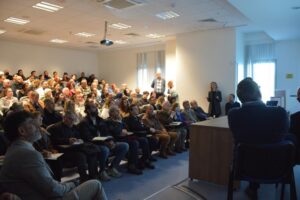


Trainings organised in the field of social sustainability cover topics such as social equality, women's rights, and the empowerment of local communities. Participants gain awareness of social responsibility projects and social development processes.
8. Economic Sustainability Training
Training on economic sustainability is organised in areas such as efficient labour use, innovative business models, sustainable trade, and the circular economy. These trainings ensure the integration of economic development and environmentally friendly business practices.
The workshops, which are organised monthly, aim to develop creative solutions for sustainable development goals and strengthen education and innovation. Participants are informed about innovation processes, sustainable technologies, and practices.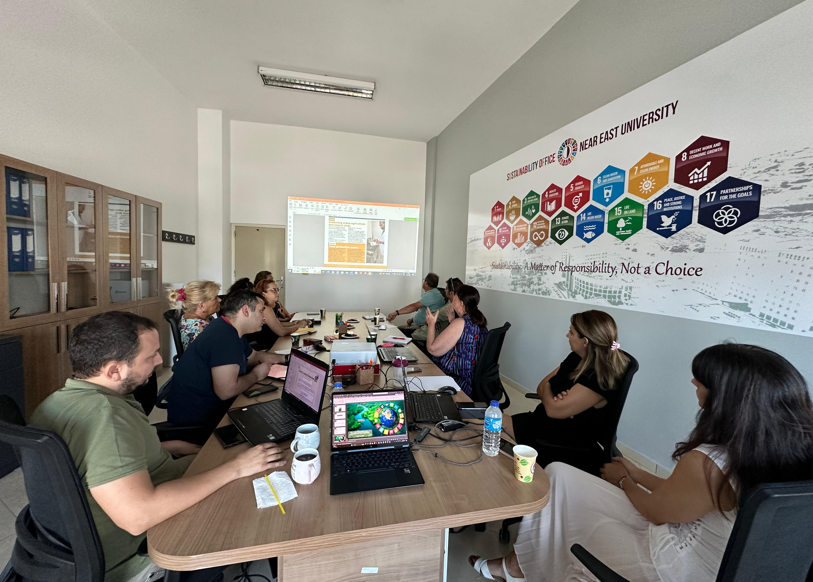
10. Climate Change and Adaptation Training
Mandatory training on climate change and adaptation strategies ensures that all academics and non-academic staff are informed about the issue and equipped to develop environmentally friendly solutions across the organisation. By making such training compulsory, the institution fosters a culture of sustainability and collective responsibility at every level.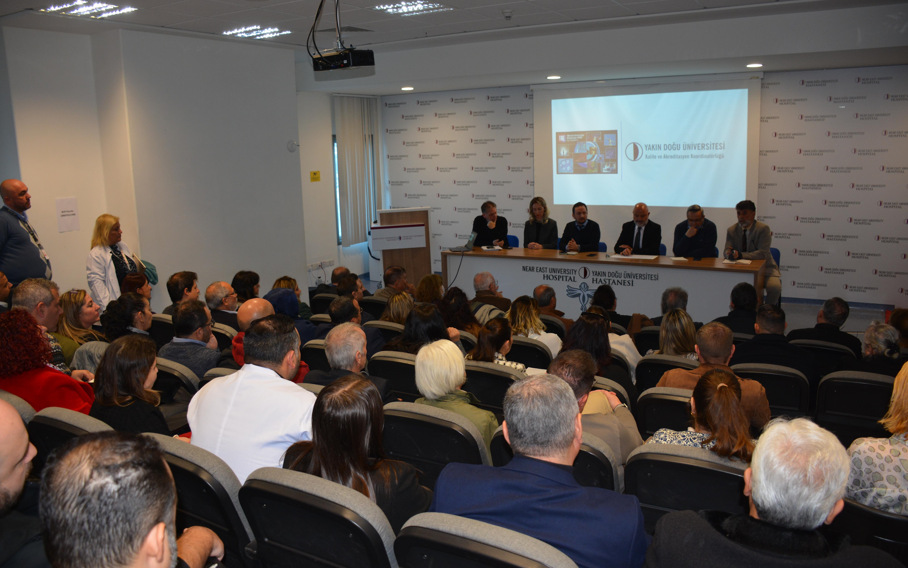
In addition, Near East University demonstrated its commitment to sustainability through the “3-Body Problem and Climate Change” conference held as part of the DESAM Research Institute’s “Periodic Conferences” series. Ranked among the world’s top 500 academics, Physics Engineering faculty member Prof. Dr. Kerem Cankoçak explored the complex relationship between the three-body problem and climate change, offering a scientific perspective on how chaotic systems can be used to model environmental dynamics. This event highlights the university’s dedication to raising awareness on sustainability and promoting interdisciplinary research that addresses global challenges.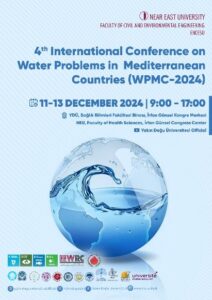
Our university organises international conferences on important topics such as sustainability and environmental issues every year. These conferences bring together researchers, experts, and stakeholders to discuss innovative solutions for water resources, climate change, and sustainable development goals. The International Conference on Water Problems in Mediterranean Countries makes important contributions to water sciences and environmental issues, focusing on water problems in the Mediterranean region.
Near East University, committed to advancing the Sustainable Development Goals (SDGs), offers a unique online training program for civil and environmental engineering staff, students and alumni on the E-StudyBox platform. This “Smart Cities and Sustainable Development Goals” course is delivered by expert NEU academics and provided free to university members. It covers key topics such as integrating smart city solutions and adopting innovative energy sources to support sustainable urban environments. It offers participants valuable insights into how technology can drive sustainable progress.
Sustainability Education for Staff